How to Create Digital Products That Sell in 2026 (Beginner-Friendly Guide)
The digital product industry is growing faster than ever, and 2026 is one of the best times to start your own online income stream.
Why?
Because creating and selling digital products has become easier thanks to AI tools, beginner-friendly platforms, and global online marketplaces.
You no longer need a big budget, technical skills, or years of experience to start.
Whether you want passive income, a side hustle, or a full online business, digital products can help you achieve it.
In this guide, you’ll learn exactly how to create digital products that actually sell — even if you’re starting from zero.
What Are Digital Products?
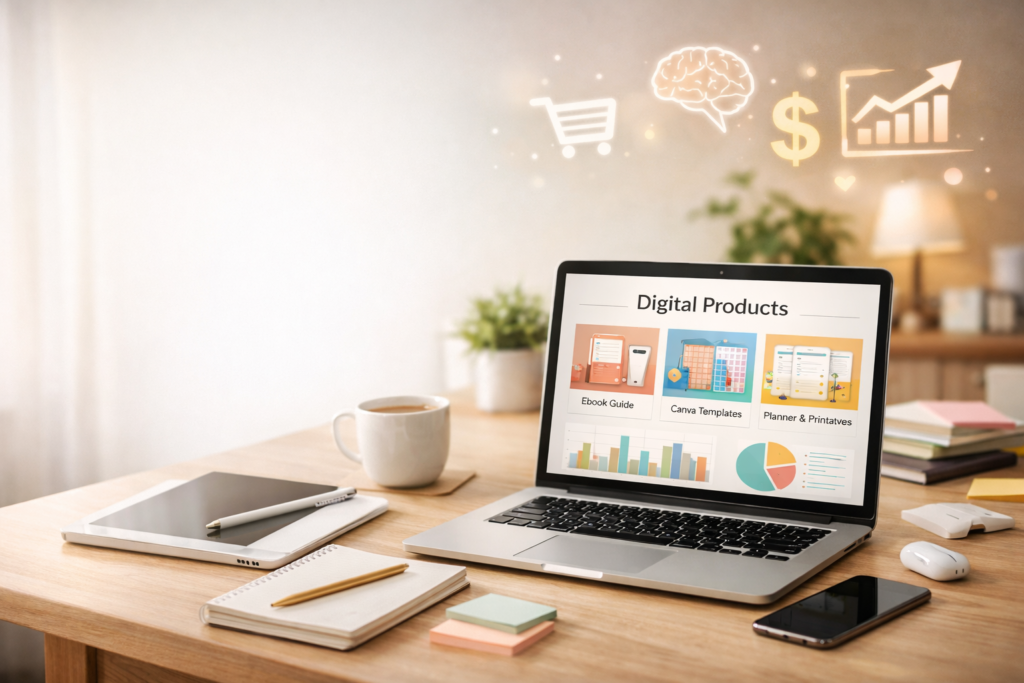
Digital products are items you can sell online that customers download or access digitally.
Common examples include:
- Ebooks
- Canva templates
- Printables
- Online courses
- Notion planners
- Stock photos
- Digital art
- Worksheets
- AI prompt packs
- Business toolkits
Unlike physical products, digital products don’t require inventory, shipping, or manufacturing.
That means higher profit margins and less risk.
Why Digital Products Are So Profitable
There are several reasons digital products are one of the best online business models:
Low startup cost
No inventory required
Unlimited sales potential
Global audience
Passive income opportunities
Work from anywhere
Once you create a product, you can sell it repeatedly without extra effort.
Why Most Digital Products Fail
Many beginners create products that never sell.
The problem is not the market — it’s the strategy.
Common mistakes include:
- Creating products without research
- Choosing a niche with low demand
- Poor design quality
- Not solving a real problem
- Weak marketing
- Pricing too high or too low
The truth is simple:
Successful digital products solve clear problems for specific people.
Step 1 — Choose a Profitable Niche
Your niche determines your success.
The best niches have:
- High demand
- Clear problems
- Buyers willing to spend money
Popular profitable niches in 2026 include:
- Personal finance
- Health and fitness
- Productivity
- Business and marketing
- Self-improvement
- Parenting
- Career skills
- AI tools
- Digital marketing
- Content creation
Tip: Beginners should target beginner audiences.
People pay more for solutions when they feel confused or overwhelmed.
Step 2 — Identify Digital Products That Actually Sell
Not all digital products perform equally.
Some formats sell better because they provide quick results.
High-selling digital product types include:
- Canva templates
- Social media kits
- Ebooks and guides
- Printable planners
- Business checklists
- AI prompt bundles
- Digital journals
- Online mini-courses
- KDP book interiors
- Website templates
Simple products often sell better than complex ones.
People want fast solutions, not complicated systems.
Step 3 — Validate Your Idea Before Creating
One of the biggest mistakes beginners make is creating products without confirming demand.
You should always validate your idea first.
Here are some easy ways:
Check Online Marketplaces
Search on:
- Amazon
- Etsy
- Gumroad
- Creative Market
If similar products exist, that’s a good sign.
Competition means demand.
Use Google Trends
Check whether interest is growing.
Look at Social Media
Pinterest, TikTok, and Instagram reveal trends quickly.
Read Customer Reviews
Reviews show exactly what customers want.
Step 4 — Create Your Digital Product
Now comes the creation stage.
You don’t need expensive software.
Beginner-friendly tools include:
- Canva
- ChatGPT
- Google Docs
- PowerPoint
- Notion
- AI design tools
Focus on:
- Clean design
- Clear instructions
- Professional appearance
- Easy usability
- Practical value
Remember:
Your product should solve one main problem clearly.
Step 5 — Price Your Product Correctly
Pricing affects sales more than most people realize.
If your price is too low, customers may think it lacks value.
If your price is too high, beginners may hesitate.
Typical beginner price ranges:
- $5 – $19 for simple products
- $19 – $49 for guides and bundles
- $49 – $99 for premium resources
Psychological pricing tips:
- Use $19 instead of $20
- Offer launch discounts
- Provide bonuses to increase value
Step 6 — Where to Sell Digital Products
There are many platforms where you can sell.
Popular options include:
- Gumroad
- Etsy
- Payhip
- Shopify
- Stan Store
- Amazon KDP
- Your own website
Selling on your own website is best long-term because you control customers and profits.
Marketplaces are good for beginners to gain visibility.
Step 7 — Marketing Strategies That Work in 2026
Creating a product is only half the journey.
Marketing is what generates sales.
Effective strategies include:
Pinterest Marketing
Great for long-term traffic and passive sales.
Blogging and SEO
Articles attract organic visitors from Google.
Short-Form Videos
TikTok, Instagram Reels, and YouTube Shorts grow audiences quickly.
Email Marketing
Email lists create repeat buyers.
Lead Magnets
Free resources attract potential customers.
Affiliate Marketing
Others promote your products for commissions.
Consistency is more important than perfection.
Step 8 — Make Your Product Stand Out
Competition exists in every niche, but you can still succeed.
Ways to differentiate:
- Better design quality
- Beginner-friendly instructions
- Bonuses included
- Unique angle
- Step-by-step guidance
- Practical examples
- Clear transformation promise
Customers choose products that feel easier and more helpful.
Beginner Success Roadmap
Here’s a simple 4-week plan:
Week 1
Research niche and validate ideas
Week 2
Create your digital product
Week 3
Set up selling platform
Week 4
Start marketing and promotion
Taking action quickly builds momentum.
Common Mistakes to Avoid
Avoid these beginner errors:
- Waiting for perfection
- Overthinking ideas
- Copying competitors
- Ignoring marketing
- Giving up too early
- Creating too many products at once
Success comes from consistency.
Digital Product Trends for 2026 and Beyond

The future of digital products is exciting.
Key trends include:
- AI-assisted creation
- Personalized products
- Micro-learning guides
- Niche templates
- Creator economy growth
- Automation tools
- Digital entrepreneurship education
Creators who adapt early will benefit the most.
Final Thoughts
Creating digital products that sell is not about luck.
It’s about solving problems, providing value, and reaching the right audience.
You don’t need to be an expert to start.
You only need:
- A helpful idea
- Simple tools
- Consistent effort
Your first product may not be perfect — and that’s okay.
Every successful creator started with one step.
Ready to Start Your Digital Product Journey?
If you want beginner-friendly guides, templates, and step-by-step resources, explore our digital products below:
👉 Visit: https://inspireandink.com/digital-products/
Download this Ebook
Start today — your future income can begin with one decision.
Frequently Asked Questions
What are the most profitable digital products to sell in 2026?
Some of the most profitable digital products include ebooks, Canva templates, online courses, printables, AI prompt packs, planners, and business toolkits. Products that solve specific problems for a targeted audience tend to sell the most.
Can beginners create digital products with no experience?
Yes. Beginners can create digital products using simple tools like Canva, ChatGPT, and Google Docs. You don’t need technical skills — just a helpful idea and clear instructions.
How long does it take to create a digital product?
It depends on the type of product. Simple products like templates or short ebooks can be created in a few days, while larger products like courses may take several weeks.
Where can I sell digital products online?
Popular platforms include Gumroad, Etsy, Payhip, Shopify, Amazon KDP, and your own website. Many creators start with marketplaces and later move to their own websites for higher profits.
How much money can you make selling digital products?
Income varies depending on your niche, pricing, and marketing strategy. Some beginners earn a few hundred dollars per month, while experienced creators can generate thousands in passive income.
Do I need to invest money to start?
You can start with very little investment. Many tools like Canva (free version) and ChatGPT are affordable or free. The biggest investment is your time and effort.
How do I know if my digital product idea will sell?
You can validate your idea by researching platforms like Amazon, Etsy, and Google Trends. If similar products already exist and have reviews, it’s a good sign there is demand.
What is the easiest digital product to create for beginners?
Ebooks, printable planners, Canva templates, and checklists are among the easiest digital products for beginners because they require minimal technical skills.
How do I market my digital products successfully?
You can promote your products through blogging, Pinterest, social media, email marketing, and short-form videos. Consistent content creation is key to attracting buyers.
Are digital products really passive income?
Digital products can become passive income once created, but they still require marketing and promotion to generate consistent sales.