Best Selling Journal & Planner Niches in the US Right Now

Introduction — Why Journals & Planners Still Sell Like Crazy in 2026
If you think journals and planners are “old school,” think again.
Despite apps, calendars, and digital tools, people in the US are buying more planners and journals than ever.
Why?
Because writing things down feels personal.
It improves focus, reduces stress, and helps people stay organized. That emotional + practical connection makes journals one of the most consistent, evergreen products you can sell online.
And for creators?
They’re perfect digital products because:
- low design cost
- easy to create
- huge demand
- unlimited copies
- passive income potential
You can sell them on platforms like Etsy, Amazon KDP, and Gumroad without inventory or shipping.
Create once → sell forever.
In this guide, you’ll discover the best-selling journal and planner niches in the US right now, plus exactly how to choose, create, and profit from them.
Let’s dive in.
What Makes a Journal or Planner Sell?
Before picking a niche, understand this:
Not all planners sell.
Generic planners = low sales
Specific planners = high sales
Winning planners usually:
- solve one clear problem
- target one specific audience
- feel simple to use
- look clean and aesthetic
- fit daily life
Example:
❌ “2026 Planner”
✅ “ADHD Daily Focus Planner for Students”
The second one sells more because it speaks directly to a problem.
Specificity = profit.
How We Identified These Niches
These niches are based on:
- Etsy bestsellers
- Amazon KDP top rankings
- Pinterest trends
- buyer reviews
- repeat demand
All are evergreen or high seasonal performers in the US market.
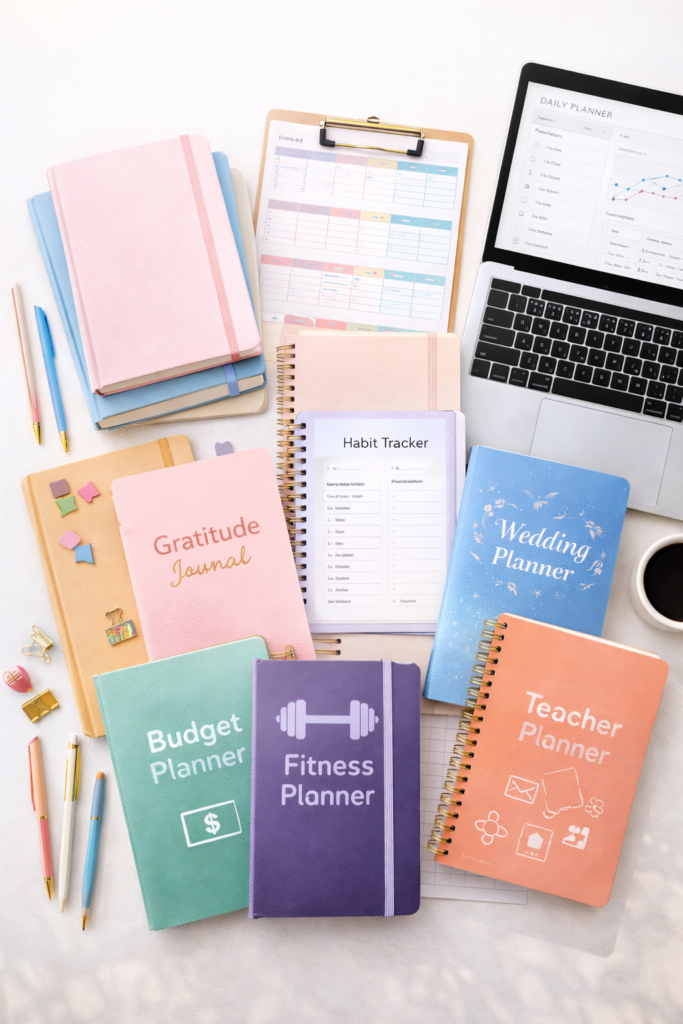
1. Daily Productivity Planners
This is the largest and safest niche.
Everyone wants to be more productive.
Why it sells
- universal audience
- everyday use
- year-round demand
- repeat buyers annually
Product ideas
- hourly planners
- to-do lists
- time blocking sheets
- weekly goal planners
Price range
$5–$15 digital | $8–$25 physical
Great for beginners.
2. Budget & Finance Planners
Money management is HUGE in the US.
People constantly search for:
- budget planners
- debt trackers
- savings challenges
Why it sells
Financial stress = strong buying motivation.
People happily pay for tools that help save money.
Product ideas
- monthly budget sheets
- savings trackers
- no-spend challenges
- debt payoff planners
Very profitable niche.
3. Fitness & Weight Loss Journals
Health is evergreen.
New Year + summer seasons explode sales.
Why it sells
- strong emotional goals
- daily tracking needed
- high repeat purchases
Product ideas
- workout logs
- calorie trackers
- step counters
- transformation journals
Seasonal spikes = big profits.
4. Self-Care & Mental Health Journals

Mental wellness is trending massively.
People want stress relief, gratitude, mindfulness.
Why it sells
Emotional products create strong attachment.
Buyers often purchase multiple versions.
Ideas
- gratitude journals
- anxiety trackers
- daily affirmations
- therapy prompts
Very popular on Pinterest.
5. Student & Academic Planners
Students buy planners EVERY year.
This means built-in repeat sales.
Why it sells
- back-to-school rush
- parents buy too
- large audience
Ideas
- homework trackers
- exam planners
- semester organizers
- study timetables
Target college + high school niches separately.
6. Wedding & Event Planners
Weddings are high budget events.
Couples happily pay for organizers.
Why it sells
High emotional + financial investment.
Ideas
- wedding checklists
- guest list planners
- budget trackers
- vendor sheets
You can price these higher ($19–$39).
7. Business & Entrepreneur Planners
Small businesses are booming.
Freelancers and side hustlers need systems.
Ideas
- content planners
- client trackers
- income/expense logs
- project managers
Perfect to sell with digital templates created in Canva.
Higher value = higher price.
8. Pregnancy & Baby Journals
Parents love memory keepsakes.
Why it sells
Emotional + giftable.
Ideas
- pregnancy trackers
- baby milestone books
- feeding logs
- sleep schedules
These sell great as physical books on Amazon KDP.
9. Travel Journals & Trip Planners
Travel is back and booming.
Ideas
- itinerary planners
- packing lists
- bucket lists
- travel memory journals
Great for summer and holidays.
10. Goal Setting & Success Planners
Self-improvement never goes out of style.
Ideas
- 90-day planners
- vision boards
- life goal systems
- habit stacking journals
Often bundled with motivational content.
Printable vs Digital vs Physical — What Sells Best?
Printables
- cheapest to create
- instant delivery
- great for Etsy
Digital planners (iPad/GoodNotes)
- growing fast
- trendy audience
- higher pricing
Physical books
- passive via KDP
- higher trust
- no printing effort
Best strategy → sell all 3 versions.
How to Validate Your Niche Before Creating
Don’t guess. Research.
Do this:
- Search Etsy → check “bestseller” tags
- Check Amazon top 100 planners
- Use Pinterest search suggestions
- Read reviews for problems
If competitors are selling = demand exists.
Tools to Create Your Planners
Simple stack:
- Design → Canva
- Interiors → PowerPoint/Google Slides
- Mockups → Smartmockups
- Publishing → KDP/Etsy/Gumroad
No fancy tools needed.
Pricing Strategy That Works
Start simple:
- $5–$9 basic
- $15–$29 bundles
- $39+ premium packs
Bundles always convert better.
Marketing Channels That Drive Sales
Focus on:
- Etsy SEO
- blog posts
- email list
- Instagram reels
Pinterest is especially powerful for planners.
Common Mistakes to Avoid
Don’t:
- create generic planners
- overdesign interiors
- ignore keywords
- upload without mockups
- quit early
Simple + niche-specific always wins.
30-Day Launch Plan
Week 1 → pick niche
Week 2 → design interiors
Week 3 → create covers + mockups
Week 4 → publish + market daily
Consistency = first sales.
Final Thoughts — Start With One Niche
You don’t need 20 planners.
Start with ONE.
Make it better than competitors.
Launch fast.
Then expand.
Because every planner you publish becomes an asset that earns while you sleep.
That’s the beauty of journals and planners.
Simple products. Real money.
Here’s a high-quality, SEO-optimized FAQ section you can add to the bottom of your article:
Frequently Asked Questions (FAQs)
Best Selling Journal & Planner Niches in the US Right Now
1. Are journals and planners still profitable to sell in 2026?
Yes — very profitable.
Even with apps and digital calendars, people still prefer writing things down for focus and productivity. Planners and journals are evergreen products that sell year-round, especially in niches like budgeting, fitness, and self-care.
Many sellers consistently earn monthly passive income with these products.
2. Where can I sell journals and planners online?
You can sell them on beginner-friendly platforms like:
- Etsy – great for printables
- Amazon KDP – physical books (printed automatically)
- Gumroad – instant digital downloads
- Your own website or blog
Start with one platform, then expand later.
3. What type sells better: printable, digital, or physical planners?
Each has advantages:
Printables (PDFs)
✔ easy to create
✔ low cost
✔ great for Etsy
Digital planners (iPad/GoodNotes)
✔ trendy
✔ higher price
✔ growing demand
Physical books
✔ more trust
✔ passive printing via KDP
✔ giftable
Best strategy → sell all three versions if possible.
4. Do I need design skills to create planners?
No.
Tools like Canva make it simple with drag-and-drop templates.
If you can use PowerPoint or Google Slides, you can create planners.
Keep designs clean and minimal — simple sells better.
5. How much money can I realistically make selling planners?
Income depends on how many products you launch and how well you market.
Typical results:
- Beginner: $200–$500/month
- Intermediate: $1,000–$3,000/month
- Advanced: $5,000+/month
Many sellers scale by creating multiple planners in one niche.
6. What are the easiest planner niches for beginners?
Start with:
- daily planners
- budget trackers
- fitness logs
- student planners
- gratitude journals
These are easy to design and always in demand.
7. How do I know if a niche will sell?
Validate before creating.
Check:
- Etsy bestsellers
- Amazon planner rankings
- Pinterest trends
- customer reviews
If many people are buying similar products, demand already exists.
Never guess — research first.
8. How many pages should a planner have?
It depends on the format:
- Printable → 10–30 pages
- Digital → 50–100 pages
- Physical books → 100–200 pages
Focus on usefulness, not page count.
More pages don’t always mean more value.
9. How long does it take to create a planner?
Most simple planners can be created in:
- 1–3 hours (basic printable)
- 1–2 days (full planner bundle)
- 3–5 days (physical book with cover & interior)
You don’t need weeks. Launch fast and improve later.
10. Do journals and planners sell year-round or only seasonally?
Both.
Evergreen niches:
- budgeting
- fitness
- productivity
- mental health
Seasonal spikes:
- New Year (January)
- back-to-school (August–September)
- holidays
Smart sellers prepare products 1–2 months before these seasons.
11. Should I create many planners or focus on one?
Start with ONE niche.
Make it high quality.
Then expand into:
- bundles
- variations
- related products
Quality beats quantity every time.
12. Can I use AI to help create planners and journals?
Yes.
AI can help you:
- generate page ideas
- write prompts
- create content
- speed up layouts
Just review and personalize everything so it feels human and useful.
AI should assist — not replace quality.
13. What price should I start with?
Good beginner pricing:
- $5–$9 single printable
- $15–$29 bundles
- $25–$40 digital planners
- $7–$20 physical KDP books
Bundles usually sell better than single files.
14. How do I get traffic and sales?
Top traffic sources:
- Etsy SEO
- blog posts
- social media
- email marketing
Pinterest works especially well for planners because it’s visual and search-based.
15. What’s the biggest mistake new sellers make?
Common mistakes:
- making generic planners
- copying competitors
- poor covers
- no keywords
- quitting too early
The winners are simply consistent.
Publish → learn → improve → repeat.